
Tongue Thrust and Tongue Tie
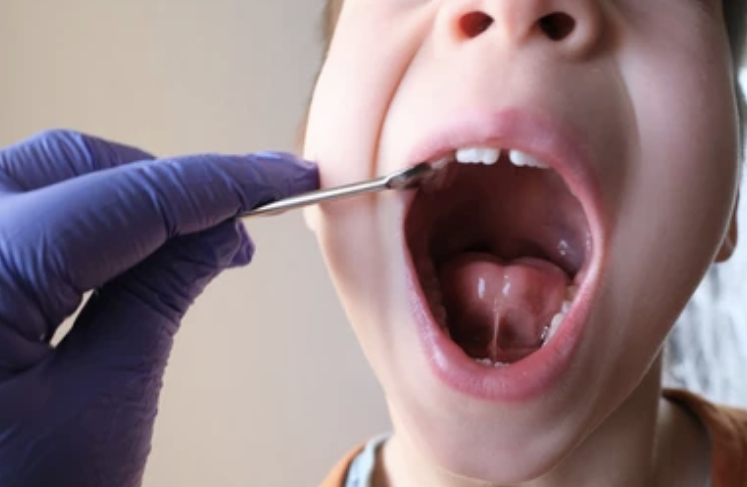
Did you know the way your tongue rests in your mouth — or the way it moves when you swallow — can affect everything from your teeth to your speech to your sleep? Tongue thrust and tongue tie are two common but often overlooked conditions that can have a big impact on both children and adults. The good news: with the right support, both are very treatable.
What is tongue thrust?
Tongue thrust, also called an orofacial myofunctional disorder (OMD), occurs when the tongue pushes forward against or between the teeth during swallowing, speaking, or at rest. Rather than resting against the roof of the mouth, the tongue sits low or forward — placing ongoing pressure on the teeth and jaw. Over time, this can contribute to dental misalignment, open bites, and changes in facial development. It’s more common than many people realize, and it can affect people of any age.
What is tongue tie?
Tongue tie (ankyloglossia) is a condition present from birth where a short, tight band of tissue — called the lingual frenulum — restricts the tongue’s range of motion. This can make it harder to lift the tongue, move it side to side, or extend it properly. Tongue tie can contribute to feeding difficulties in infants, speech sound errors, difficulty with oral hygiene, and myofunctional patterns like tongue thrust. Treatment often involves a simple in-office procedure (a frenectomy) followed by therapy to retrain tongue function.
Signs to look out for:
In children:
- Mouth breathing or open-mouth resting posture
- Tongue visible between teeth when swallowing or speaking
- Difficulty with certain speech sounds (s, z, th, sh)
- Dental crowding, gaps, or an open bite
- Messy or noisy eating; difficulty chewing
- Drooling past age 2
In adults:
- A lisp or “slushy” speech quality
- Relapse of orthodontic treatment
- Jaw tension, TMJ pain, or frequent headaches
- Snoring or disrupted sleep
- Difficulty with swallowing certain textures
- Chronic neck or facial tension
Key Milestones:
|
Age |
What to expect |
|
Birth – 6 months |
Tongue should move freely for nursing or bottle feeding; restricted movement may signal tongue tie |
|
12 – 18 months |
Transitioning to cup drinking and soft solids; tongue should begin moving in mature patterns |
|
2 – 3 years |
Drooling should resolve; lips should rest together comfortably at rest |
|
4 – 5 years |
Mature swallow pattern develops; tongue should not be visible between teeth during speech or swallowing |
|
6+ years |
Ideal window to address tongue thrust before permanent teeth fully emerge; earlier treatment supports orthodontic outcomes |
When to seek treatment:
You don’t need to wait until a problem is obvious. If you’ve noticed any of the red flags above — or if your child’s dentist, orthodontist, or pediatrician has flagged a concern — it’s a great time to reach out. Early intervention tends to produce the best results, especially when orthodontic treatment is planned or underway. That said, adults benefit just as much from myofunctional therapy, and it’s never too late to address these patterns.
As an SLP with advanced training in orofacial myology, I provide a thorough evaluation to understand the full picture — and create a personalized plan that gets to the root of the issue, not just the surface symptoms.