
Thumb Sucking and Oral Habits
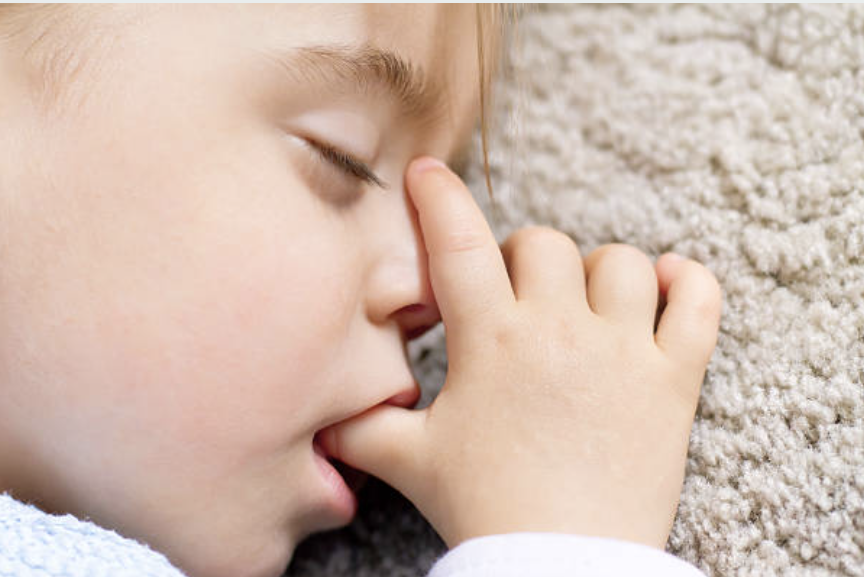
Thumb sucking, pacifier use, nail biting, cheek chewing — these habits are incredibly common, and for young children, they often start as a natural way to self-soothe. But when oral habits persist past a certain age, they can quietly shape the way the mouth, teeth, and jaw develop. The encouraging news is that with a gentle, supportive approach, these habits can absolutely be changed.
What are oral habits?
Oral habits are repetitive behaviors involving the mouth, lips, tongue, or fingers that can interfere with normal oral development over time. The most common include thumb or finger sucking, prolonged pacifier use, tongue thrusting, nail biting, lip sucking or biting, and cheek chewing. While many of these behaviors are harmless in infancy, continued use past the toddler years can place sustained pressure on developing teeth and bones — leading to misalignment, changes in jaw shape, and disrupted muscle patterns.
As an SLP with advanced training in orofacial myology, I look at the whole picture: not just the habit itself, but the underlying muscle function, oral resting posture, and any contributing factors that may be keeping the habit in place.
Signs to look out for:
Behavioral signs:
- Thumb or finger sucking past age 3–4
- Pacifier use beyond age 2
- Habit continues during the day, not just at sleep
- Child seems unable to stop despite wanting to
- Nail biting, lip chewing, or cheek sucking as a regular pattern
Physical signs:
- Open bite (gap between upper and lower front teeth)
- Protruding upper front teeth or “buck teeth”
- Narrow upper jaw or crowded teeth
- Callused or irritated thumb or finger
- Mouth breathing or open-mouth resting posture
Key Milestones:
|
Age |
What to expect |
|
Birth- 6 months |
Non-nutritive sucking (thumb, pacifier) is normal and serves an important self-soothing function |
|
12-18 months |
Pacifier use is ideally beginning to reduce; daytime habits should be tapering naturally |
|
2 years |
Good time to phase out pacifier entirely; thumb sucking may still be present but should be decreasing |
|
3 – 4 years |
Most children naturally stop thumb sucking by this age; persistent habits warrant a closer look |
|
5 – 6 years |
Permanent teeth begin to emerge; habits still present at this stage can have lasting effects on dental development |
When to seek treatment:
If an oral habit is still going strong past age 3–4, or if you’re already seeing changes in your child’s teeth or bite, it’s worth scheduling an evaluation. You don’t need to wait until the habit causes a visible problem — earlier support leads to easier habit elimination and better outcomes for oral development.
Therapy focuses on building awareness, strengthening the muscles involved, and finding healthy alternatives to the habit — never on shame or pressure. Many children (and adults!) are surprised by how much progress they can make in just a few sessions when given the right tools and encouragement.